Typical Price Ranges by Project Type
Reference values for the German market (net, including concept, testing and roll-out) — orientation, not a price list
| Project type | Typical cost | Examples |
|---|---|---|
| Concept phase (at at²) | from €2,500 | Clarify requirements, sketch the architecture, quantify the effort — the basis for our guaranteed fixed price |
| Small tool / plugin | under €1,000 – 8,000 | Export tool, automation of a single work step, plugin for existing software |
| Extension of an existing system | €5,000 – 25,000 | ERP interface, new module, tablet interface for an existing application |
| User interface for a machine or device | €10,000 – 40,000 | HMI, configuration software, developer dashboard, hardware-level integration |
| Specialist application for a process | €25,000 – 80,000 | Order management, planning software, test-bench software, customer portal with ERP connection |
| Industry 4.0 platform | €50,000 – 150,000 | Machine connectivity, data acquisition, dashboards, multiple sites, roles and permissions |
| Product software (sold to third parties) | from €80,000 | Software you sell yourself — including update capability, licensing, documentation, CRA compliance |
| AI feasibility prototype (at at²) | under €3,000 | Clarifies whether your use case works reliably with AI before you invest more |

What Really Drives the Price
Six factors — in descending order of importance
- Domain complexity: How many rules, special cases and states does your process have? This is the biggest cost driver — not the user interface.
- Interfaces: ERP, inventory management, machine controls, measuring devices, cloud services. Every integration needs analysis, development and coordination with the other side.
- Proximity to hardware: Software that talks to sensors, controllers or microcontrollers needs test rigs and time on the real device.
- Users and roles: Five colleagues in the same room or 500 users across three sites with permission management — this decides architecture and security effort.
- Quality requirements: Does the software have to run 24/7, be validated (MedTech) or comply with the Cyber Resilience Act? Then testing and documentation effort rise.
- Interface and platforms: Desktop, web, tablet, app — every additional platform costs, but modern frameworks keep the surcharge manageable.
Hourly Rate, Fixed Price or Time & Material?
How billing works in Germany — and how we do it
Experienced software developers in Germany cost €90 to €160 per hour depending on region and specialisation; agencies in large cities are often above that, freelancers sometimes below, offshore providers well below — with the familiar trade-offs in coordination, language and accountability.We work with a two-stage model: First a concept phase from €2,500, in which we clarify requirements, architecture and effort together. On that basis you receive a quote with a guaranteed fixed price — no hidden costs and no additional claims as long as the agreed scope does not change. Change requests during the project are quantified in advance; you decide. For long-term development after the project we offer maintenance packages or hour contingents.
Three Examples from Practice
How effort is distributed in real projects
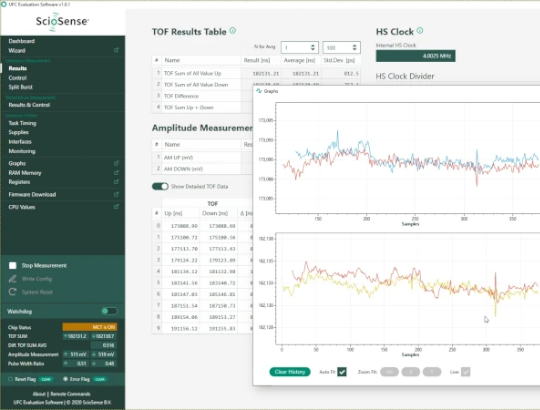
Configuration software for sensors (ScioSense): Hardware-level software, developer dashboards and DLLs for external developers — grown over several product generations. The effort went less into the interface than into reliable communication with the hardware and into maintenance over years.Remote control for heating systems (HDG Bavaria, WebControl): Web interface, connection to the heating controller, operation at end customers worldwide. Interface and security determined the price, not the design.
Dental CAD software (SHERA, SHERAeasy-model): Complete product development with mesh processing, implant libraries and connection to 3D printing — an example of product software where update capability and documentation were planned in from the start.
How to Reduce Costs Without Losing Quality
What we advise clients in the first conversation
- Core process first, wishes later. A first release with the 20 percent of functions that deliver 80 percent of the value is cheaper and in use sooner. The rest follows in stages.
- Extend rather than replace. A module, a plugin or an interface is often enough — a complete rebuild is rarely the cheapest solution.
- Have standard software checked. If an off-the-shelf product covers 90 percent of your process, we tell you — custom software pays off where standard software ends.
- Name one point of contact. Fast decisions on your side save more money than any technology choice.
- Provide test data and access early. Waiting for interface access is the most common cause of delays.
Frequently Asked Questions About the Cost of Custom Software
What clients ask us before the first quote
Roughly how much does custom software development cost in Germany?
+
Small tools and plugins start at under €1,000, extensions of existing systems usually range from €5,000 to €25,000, stand-alone specialist applications from €25,000 to €80,000 and Industry 4.0 platforms from €50,000 to €150,000. Hourly rates of experienced developers in Germany are €90 to €160. At at², every larger project starts with a concept phase from €2,500, followed by a guaranteed fixed price.
Why is a concept phase needed — can I not get a quote directly?
+
For small, clearly defined tasks, yes. For everything else, a quote without a concept phase would be a guess — and guessed quotes are either priced too high or lead to additional claims later. The concept phase from €2,500 clarifies requirements, interfaces and architecture far enough for us to guarantee a fixed price. The result belongs to you, even if you continue with another provider afterwards.
Do you bill by the hour or at a fixed price?
+
Projects are billed at a guaranteed fixed price after the concept phase. Maintenance, smaller extensions and on-site assignments run on a time-and-material basis at a fixed hourly or daily rate within the usual market range — we tell you the rate in the first conversation. On-site assignments are charged plus travel expenses.
What is included in the fixed price?
+
Concept, development, testing, documentation, roll-out and the fixing of defects within the agreed scope. Not included are changes to the scope (which we quantify in advance), third-party licences and hardware.
What running costs arise after the project?
+
Custom software has no licence fees per user. Running costs arise for hosting (for web applications), for maintenance — security updates, adaptations to new operating systems or interfaces — and for further development. As a rule of thumb many clients budget 10 to 20 percent of the development cost per year, often considerably less once the software runs stably.
Is custom software more expensive than standard software?
+
In purchase usually yes, over the period of use often not: no licence fees per user, no functions you pay for but do not need, and no workarounds because the standard product does not know your process. The comparison pays off from the point where you would have to adapt your process to the software instead of the other way round.
How much does an app cost as part of custom software?
+
An app as the user interface for a device, a customer portal or a specialist application typically ranges from €10,000 to €40,000 — depending on platforms (iOS, Android, both), offline capability and integrations. We do not develop pure marketing apps.
How long does a custom software project take?
+
Small tools in days to a few weeks, extensions in 4 to 10 weeks, specialist applications in 3 to 6 months, platforms in 6 to 12 months — each in stages, so that you have first results in use early on.
Your Number Instead of a Range
Free initial consultation, then a concept phase from €2,500
Describe your process to us — in a free initial consultation we tell you the order of magnitude of your project, whether custom software is worthwhile at all and how we would proceed. More about our custom and industrial software.
ScioSense
The leading expert in sensor solutions
ScioSense provides a range of off-the-shelf environmental sensor solutions, including solutions for monitoring air quality, relative humidity and temperature changes and more. We created the complex Software via embedded programming from the ground up. 
HDG Bavaria
WebControl
Smart home technology powered by at²: New heating systems of HDG Bavaria now can be controlled from everywhere in the world. 
SHERA
Dental CAD software SHERAeasy-model
SHERAeasy-model, the model-builder software of dental manufacturer SHERA Werkstoff-Technologie, was built entirely in-house by us: dental labs use it to turn intraoral scans into print-ready 3D models quickly and intuitively - with an automated workflow, implant libraries, and a direct connection to SHERAprint 3D printing.

 Call us
 WhatsApp
 E-Mail

